
Romania is the final destination for Europe’s old and polluting cars
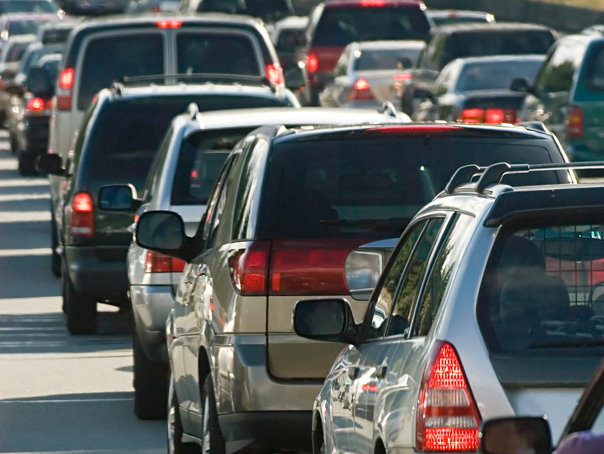
The 2Celsius Association reports that in Romania, the average age of vehicles is 16.5 years, making it the second-oldest vehicle fleet in the European Union.
Every year, hundreds of thousands of old, polluting used cars are registered in the country, in the absence of taxes or effective deterrents, according to association representatives. They claim that the ratio of imported used cars to newly purchased ones is 3 to 1, and nearly half of the vehicles registered in 2024 did not meet emission standards stricter than Euro 4.
According to the cited source, Romania is at the receiving end of an internal flow of used vehicles traveling from Western European countries toward Central and Eastern Europe. Emissions are not externalized globally but are instead relocated within the European Single Market, with the resulting public health and environmental costs borne by Romanian citizens.
“Romania has the legislative tools to take action within the single market. A non-discriminatory tax, based on actual emissions and applied uniformly to all vehicles regardless of origin, is not only feasible but also urgent,” states Raul Cazan, the association’s president.
The major structural problems
A report prepared by the association shows that Romania faces three main structural problems:
- Lack of effective environmental taxes. Romania does not have a registration tax linked to vehicles’ actual emissions. The pollution tax, which was eliminated in 2017 due to incompatibility with EU law, has not been replaced with an equivalent, non-discriminatory mechanism.
- Insufficient technical inspections upon import. The current inspection procedure for imported vehicles does not include actual exhaust emissions tests and does not verify the integrity of pollutant control systems (catalytic converter, particulate filter).
- Lack of comprehensive data. The Romanian government does not systematically collect data on the makes, models, age, and tested emissions of imported used vehicles, which makes it impossible to develop a well-informed public policy.
The report proposes the establishment of a dynamic environmental tax based on actual emissions (NOx and CO₂ in g/km), with significant penalties for diesel vehicles that do not meet the Euro 6 standard. It also proposes rigorous physical inspections at the point of entry into the country, conducted by RAR, and the imposition of a mandatory minimum standard for imported vehicles, to be implemented gradually: at least Euro 6 for diesel and Euro 4 for gasoline by 2027, with a clear transition timeline.